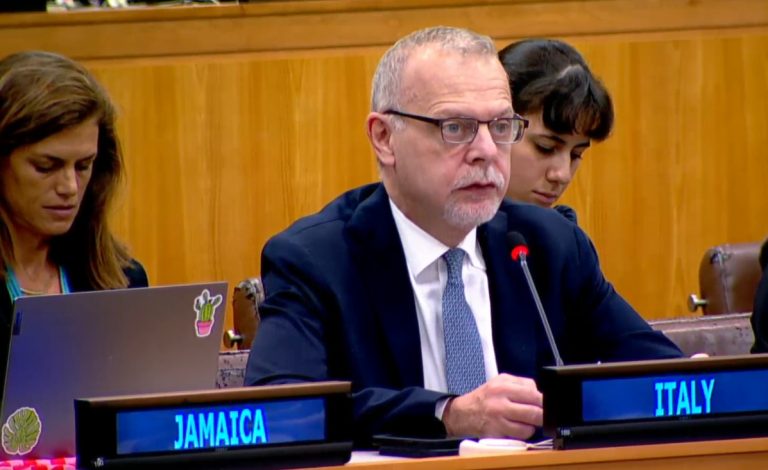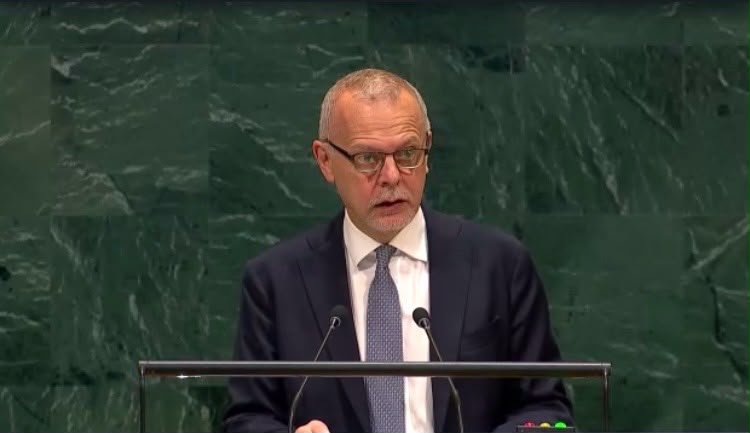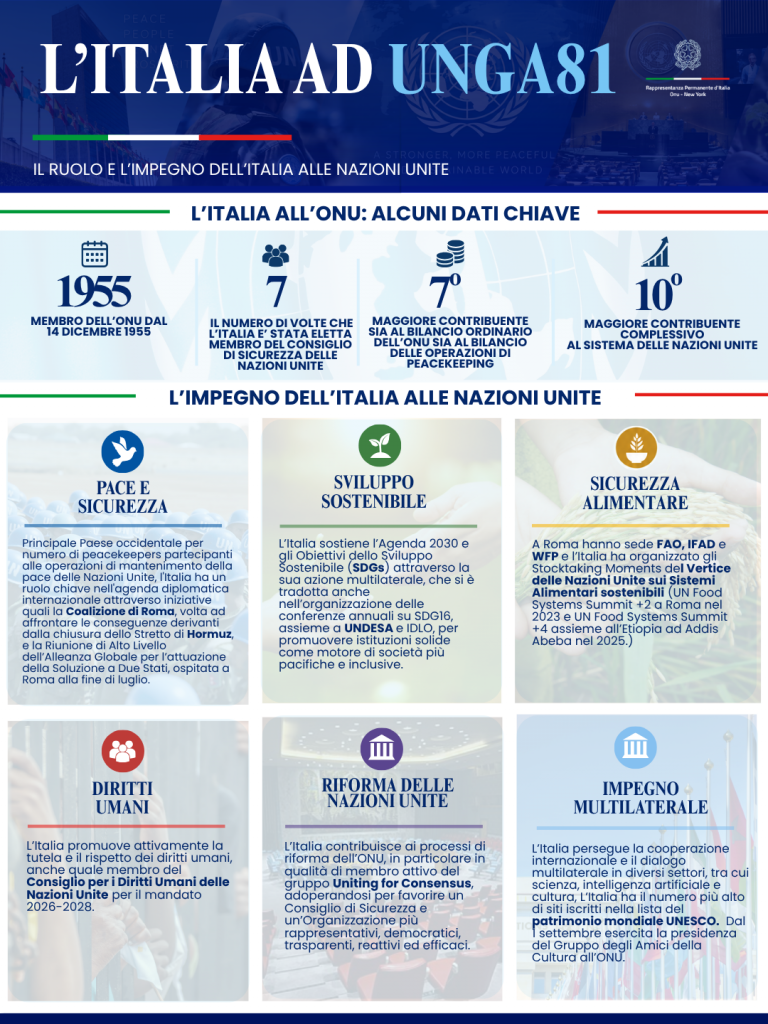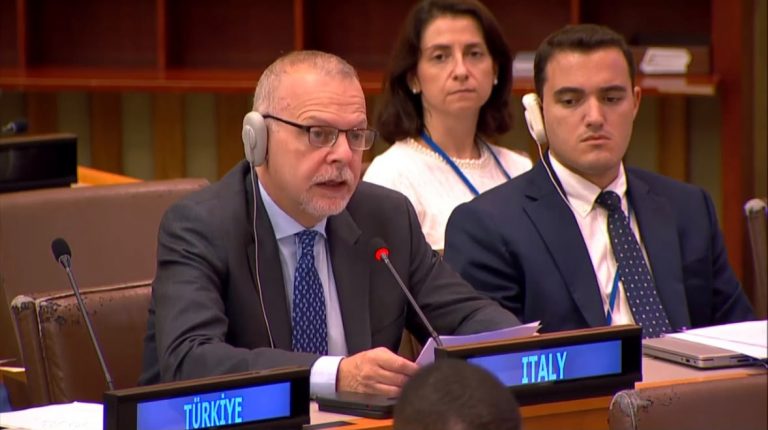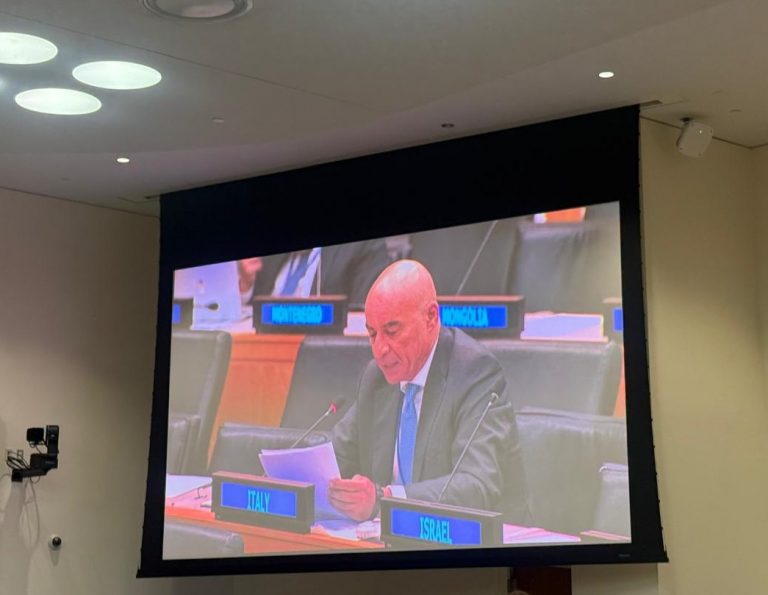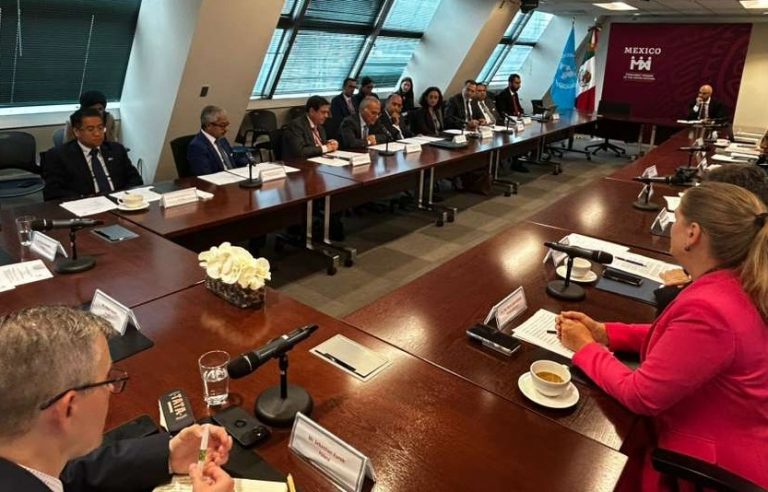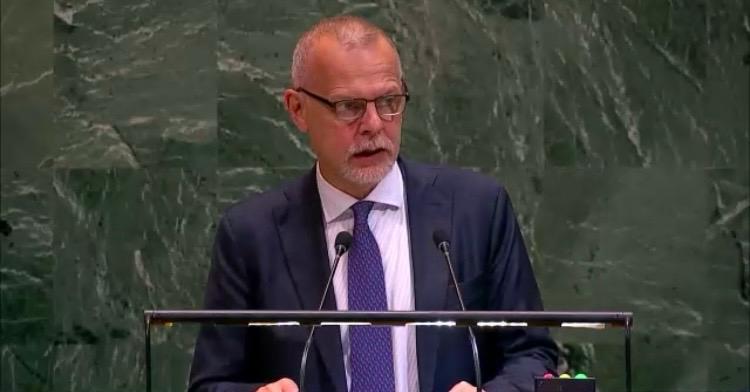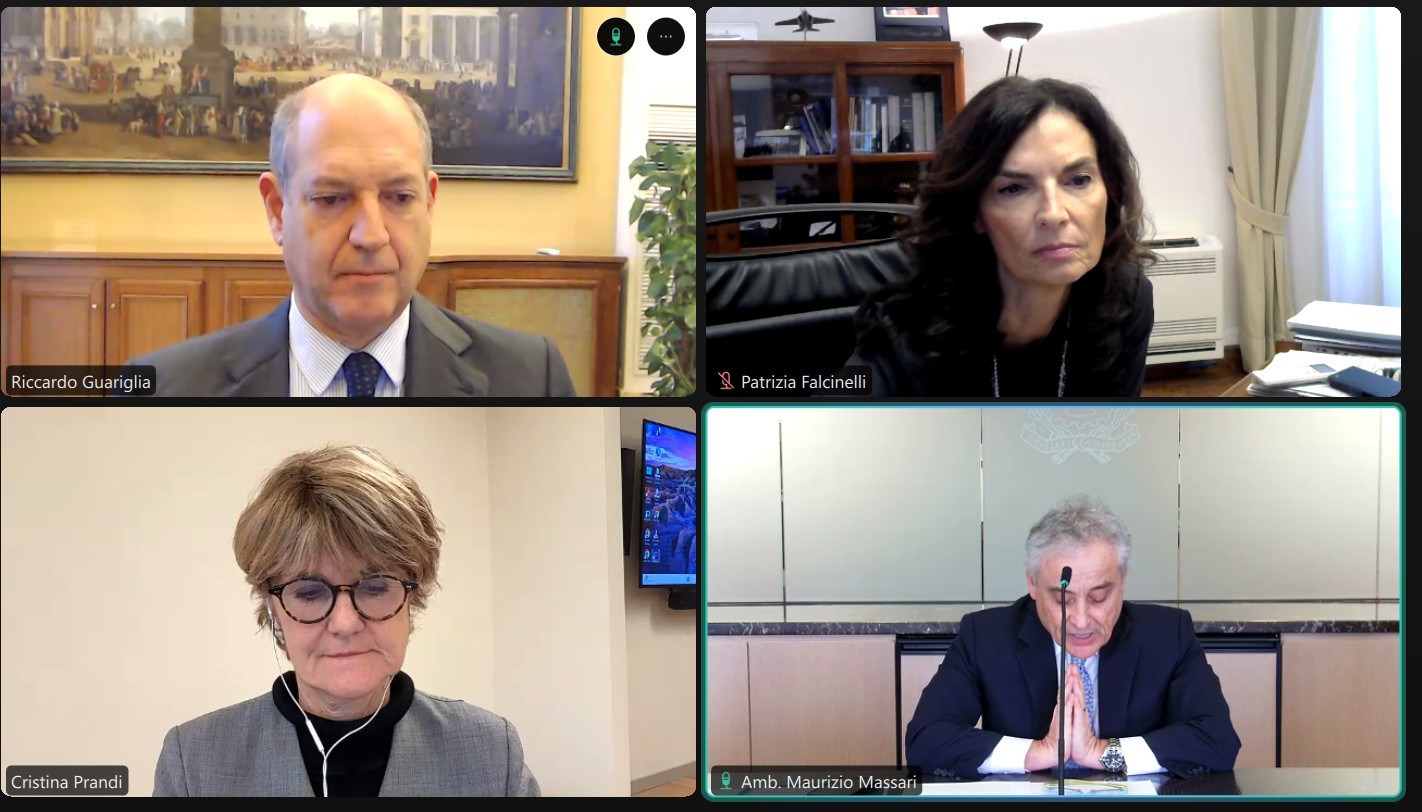
On December 4, 2025, the webinar “The United Nations 80 years since its founding and Italy 70 years since joining the Organization: the challenges of multilateralism from the perspective of young people” was held to bring together current and former interns with the Ministries of Foreign Affairs and of Education, Universities, and Research and with the Italian Association of Higher Education Institutes (CRUI) for a discussion. The key speakers were Ambassador Riccardo Guariglia, Secretary General of the Ministry of Foreign Affairs and International Cooperation; Ambassador Maurizio Massari, Permanent Representative of Italy to the United Nations in New York; Minister Plenipotentiary Patrizia Falcinelli, Director General for Resources and Innovation at the MFA; and Professor Cristina Prandi, Dean of the University of Turin, representing CRUI.
Ambassador Guariglia, echoing the words of the President of the Republic, emphasized that multilateralism is not mere bureaucracy but a tool to defuse tensions and promote peaceful solutions, pointing out that often it is not the international organizations that are inefficient but rather states that prevent the multilateral system from functioning effectively. He gave some examples of successful multilateral action, such as the recent resolution on the Olympic Truce adopted by consensus by the UN General Assembly. The Secretary-General also outlined the reform of the Ministry of Foreign Affairs, in force as of January 1, 2026, designed to modernize the diplomatic machine, strengthen its economic dimension, simplify bureaucracy, as well as the initiative to open the new MFA hiring process to all master’s degrees and make greater use of the skills of young people, particularly in the economic-commercial and new technology fields.
Ambassador Massari focused on the challenges facing the multilateral system, emphasizing, among other things, that the United Nations remains the only universal forum where all States can engage in dialogue and express their positions. In this regard, he recalled the role of the General Assembly in the crises in Ukraine and Gaza, the importance of renewing peacekeeping missions, such as the recent UNIFIL mission, and the conclusion of important multilateral agreements, while highlighting how decision-making difficulties are linked to the political will of States, in particular the use of the veto in the Security Council. The Italian Permanent Representative also outlined the main aspects of the ongoing United Nations reform process aimed at strengthening the efficiency of the Secretariat, the proposals for reform of the Security Council in the context of the “Uniting for Consensus” initiative coordinated by Italy, and the adjustment of the international financial architecture. In his view, multilateralism is not a choice but a necessity, and young people must be increasingly involved in multilateral processes.
Minister Plenipotentiary Falcinelli emphasized the educational value of internships at the MFA offices, noting that hundreds of internships are offered each year, allowing young people to gain firsthand experience of diplomatic work. She outlined the changes to the diplomatic new hiring process: it is now open to all master’s degrees (enabling successful candidates to enrich their careers with new skills), and the oral exam now includes a question on new subjects of the candidate’s choice (e.g., cybersecurity, international development cooperation, history and promotion of Italian culture, communication and organization of major events), greater emphasis on knowledge of the Ministry’s regulations, and modification of the preliminary selection test with a penalty system for incorrect answers. She also emphasized the importance of curiosity as a decisive quality for passing the diplomatic hiring process, together with the ability to critically select from the vast flow of information available today.
Dean Prandi focused her remarks on the relationship between universities, education, and diplomacy, referring to Italy’s decision to invest in young people. Internships at MFA offices are described as an essential complement to academic studies, by bringing students closer to the diplomatic world and helping them develop cross-cutting skills in an increasingly multidisciplinary perspective. She referred to the growing importance of ‘science diplomacy’, emphasizing how scientific research is now one of the languages of diplomacy and how it is necessary for scientific profiles to acquire diplomatic skills, praising the decision to open the diplomatic hiring process to all master’s degrees.
During the second part of the meeting, dedicated to contributions from young people, a strong awareness of the transformations underway has emerged, with a clear desire to participate in redefining the rules of the multilateral system. First of all, the gap between the public perception of the United Nations and the concrete results achieved, particularly in terms of crises avoided or prevented in the Global South, was highlighted, showing how the younger generations are very sensitive to global issues such as climate change, migration, and inequality, but at the same time distrust traditional multilateral institutions and demand more effective tools to communicate the added value of multilateralism. Reflections were also shared on the relationship between multilateralism and emerging technologies, with a particular focus on artificial intelligence, which is transforming economies, societies, and geopolitical relations.
AI requires shared rules that no single state can define on its own, rules that should lead to its fair and responsible development without creating a new divide between those who have access to technology and resources and those who do not. The debate among the younger participants in the discussion also revealed that the voice of youth is an essential component of multilateral decision-making processes and that young people must have the courage to get involved. Topics like the support for Italian companies abroad and the importance of international agreements, such as Biodiversity Beyond National Jurisdiction (BBNJ), were also discussed.
Finally, the future of peacekeeping and Italy’s role were touched, noting how United Nations peace operations are undergoing a phase of transformation, with increasing regionalization of missions, particularly in Africa. In particular, it was observed that UN must increasingly take on a coordinating role for regional initiatives, an area in which Italy can make a valuable contribution thanks to the experience gained in missions such as UNIFIL and its leading role in training and knowledge transfer.
The meeting clearly outlined the challenges facing multilateralism today, but also of the opportunities for reform and revitalization offered by the contribution of the younger generations. The important dialogue between institutional representatives and interns highlighted, on the one hand, Italy’s commitment to promoting a more effective and inclusive multilateralism that is attuned to technological and scientific transformations and, on the other, the willingness of young people to actively participate in the definition of global rules, thus reaffirming the centrality of the United Nations as an irreplaceable platform for international discussion and cooperation.
The full video of the webinar is available at this link https://www.youtube.com/watch?v=TBfnDFTIybM