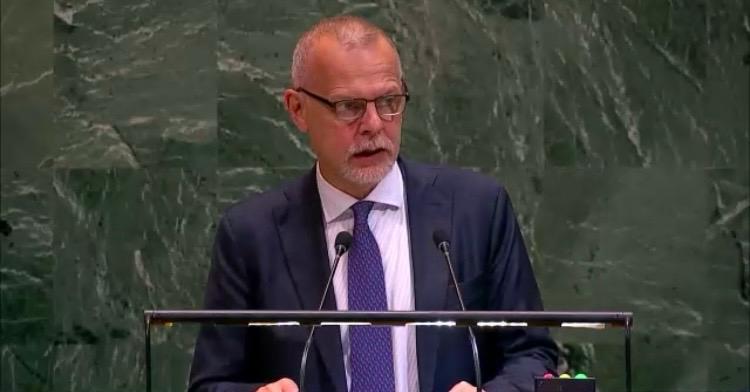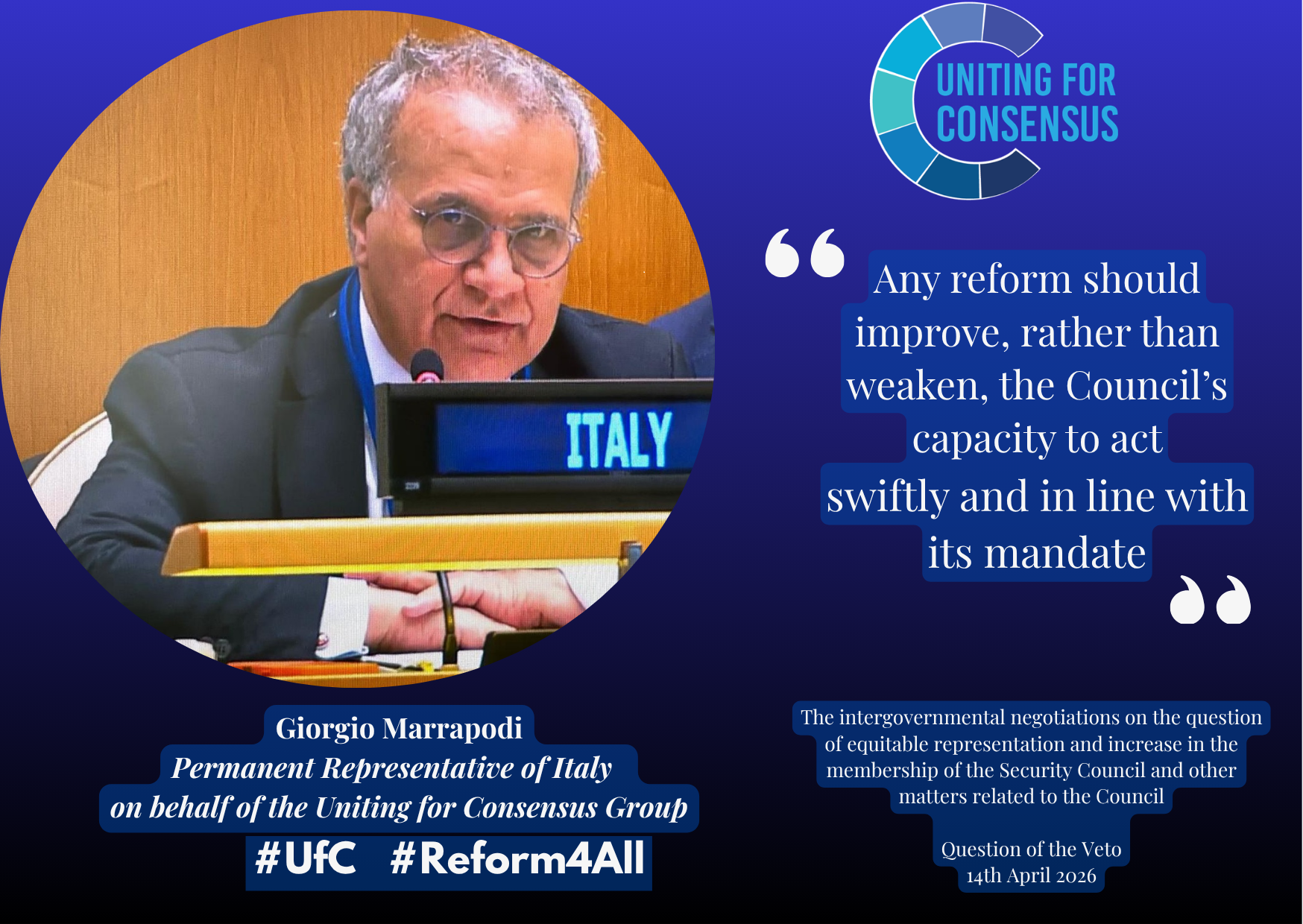
New York, 14 April 2026
Distinguished Co-Chairs,
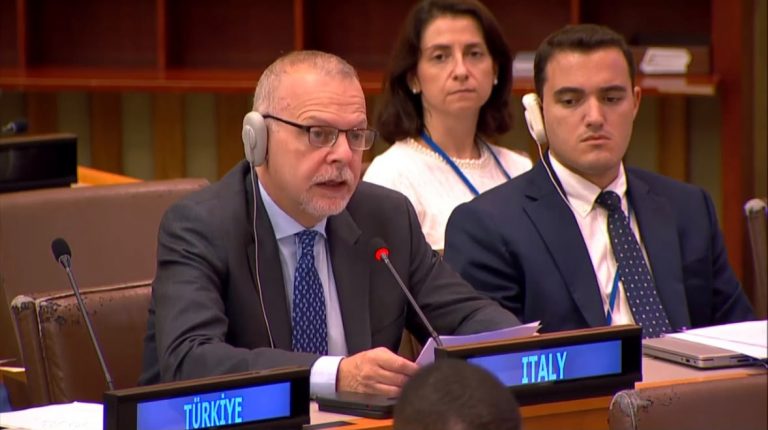
I make this statement on behalf of Uniting for Consensus (UfC). (1)
I wish to thank you for convening the third meeting of the IGN on an issue at the center of the Security Council reform: the question of the veto – one of the 5 interconnected clusters identified by the General Assembly Decision that established the IGN (62/557).
As witnessed on numerous occasions, the veto deeply affects the efficiency of the Security Council, paralyzing its capacity to fulfill its mandate to preserve international peace and security as outlined by the UN Charter.
The veto runs counter to the principles of democracy, accountability, efficiencyand sovereign equality between states.
The UfC’s position is simple and consistent. While firmly advocating for the outright suppression of the veto, as its misuse and abuse are the root cause of many of the Council’s shortcomings, UfC acknowledges the complexities involved in this matter.
Although the vast majority of the UN membership agrees on ideally abolishing the veto, which is an anachronistic tool, this requires that the five Permanent Members (P5) be willing to relinquish their prerogative and agree to the corresponding UN Charter amendment.
For the time being, since this amendment seems unattainable in the short term, we call for immediate, pragmatic and tangible actions to address how to best limit the use and abuse of the veto, which is both feasible and already reflected in the practice of certain Council members.
UfC is of the strong view that the P5 should not use and abuse the veto in specific circumstances, such as, but not limited to, mass atrocities and war crimes, in line with the existing initiatives, supported by a majority of the UN membership, including the Franco-Mexican initiative and the ACT code of conduct.
UfC is open to discuss how these immediate measures, which are currently implemented on a voluntary basis, could be formalized or codified, in the context of broader Security Council reform.
While it exists, the veto should be, at least, subject to accountability. In this regard, we commend the 2022 “veto initiative” (2) to enhance transparency and accountability by requiring the General Assembly to convene and scrutinize instances where a veto is exercised.
Similarly, we note that the resolution on the revitalization reaffirmed the need to fully implement and adhere to all provisions of the Charter of the United Nations as they relate to the decision-making process in the Security Council, including Article 27(3) of the Charter.
Moreover, we would like to stress that the threat of the use of the veto also influences negatively the decision-making process and shifts balances in the Security Council. Notably, it is often exercised in particularly delicate and critical moments, leaving the UN without the necessary tools to act.
While permanent seats and their current prerogatives respond to a specific historical context, any reform to the Council should not undermine our collective security framework, with devastating consequences, particularly when civilians are at risk.
UfC continues to believe that the issue of the veto can be addressed in a more democratic manner by strengthening the role and increasing the number of elected members, thereby shifting the decision-making balance in their favor.
Any reform should improve, rather than weaken, the Council’s capacity to act swiftly and in line with its mandate to effectively respond to the urgent needs of those it is meant to protect. In this spirit, we stand ready to continue engaging constructively with all Member states and negotiating groups to advance a balanced and pragmatic reform, guided by a shared sense of responsibility and a firm commitment to multilateralism.
I thank you.
1 A pro-reform, cross-regional and diversified group composed of Argentina, Canada, Colombia, Costa Rica, Italy, Malta, Mexico, Pakistan, Republic of Korea, San Marino, Spain and Türkiye.
2 Resolution A/RES/76/262