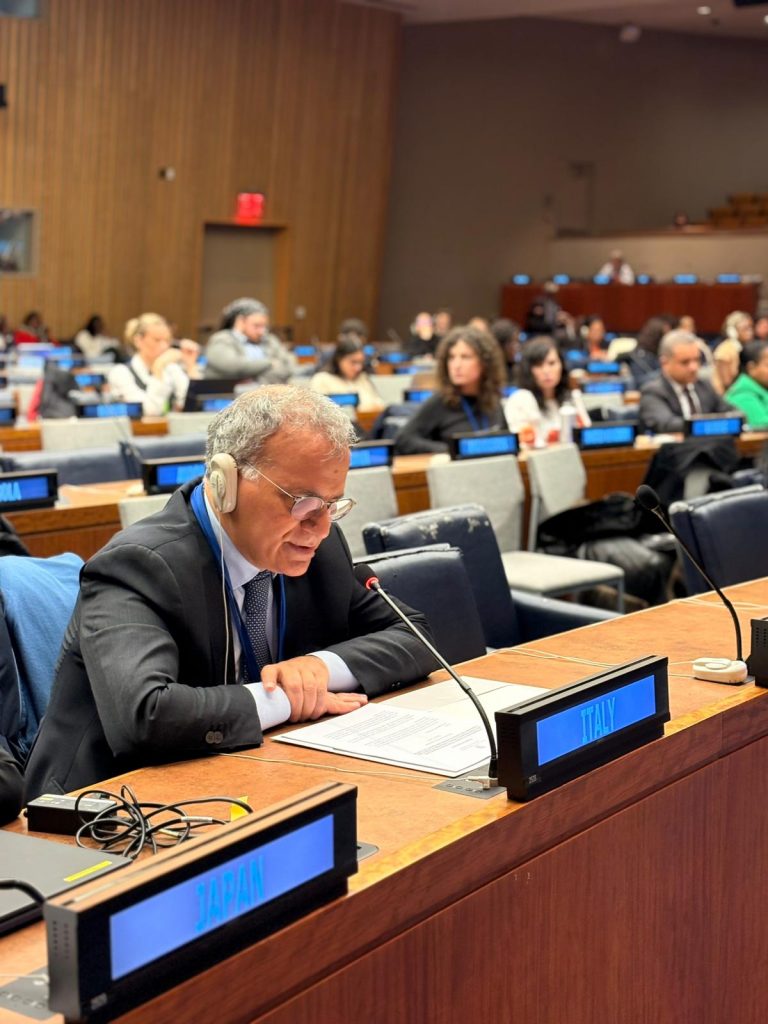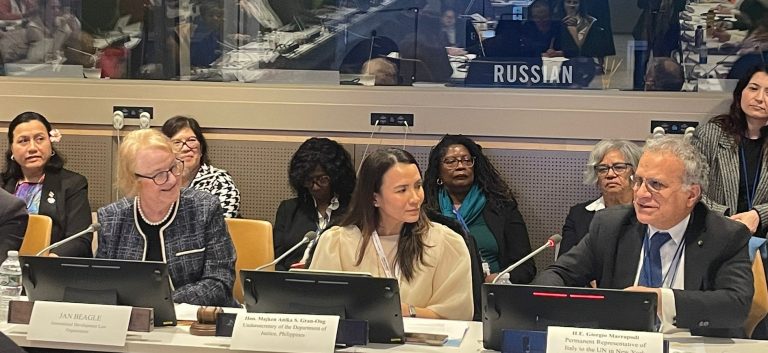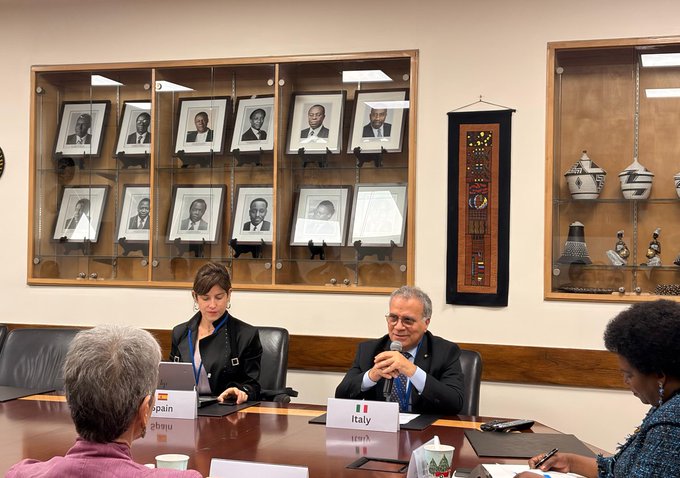
Honorable Chair,
Your Excellencies,
Distinguished Colleagues,
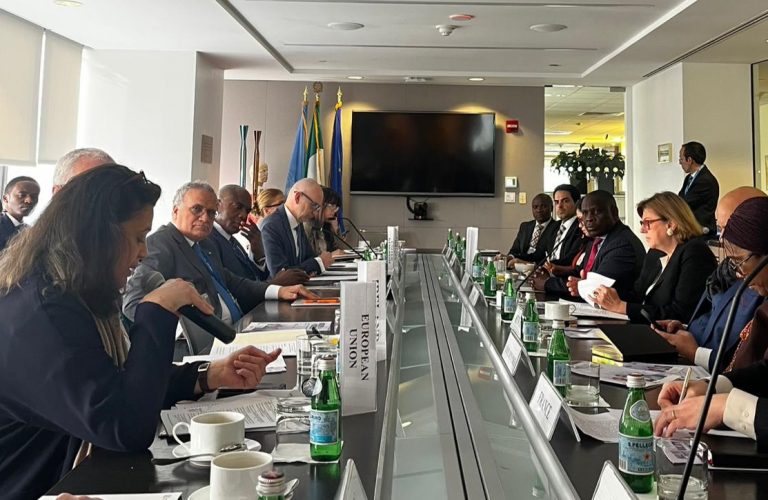
I wish, first and foremost, to thank the Permanent Mission of Uganda for hosting us today in their premises. I also wish to thank UNIDO for their role in the organization of this side-event, as well as the other co-sponsoring countries, Spain and Austria.
I am particularly glad to express appreciation for our longstanding cooperation with UNIDO and to recall the successful event organized in Addis Ababa last July in the margins of UNFSS+4, when we gathered hundreds of participants from government, civil society and the private sector around the topic of sustainable coffee value chains.
Let me say that today’s event dedicated to coffee is particularly timely: it was only yesterday that the General Assembly approved a resolution recognizing the cultural, social and historical significance of coffee, as well as its economic benefits and contribution for both exporting and importing countries.
We are proud to be part of the core group that tabled that resolution, and we are equally proud of sitting here today as co-sponsors of this insightful side event.
Excellencies,
Today’s meeting is of particular interest for Italy, as it allows us to dwell into the impact that sustainable and inclusive coffee value chains can have on the empowerment of women and youth, especially in a context such as the African continent.
Why does it matter?
- First, because Africa is the youngest continent on earth, with almost two thirds of its population under 25 years old.
- Second, because African women hold a transformative potential for growth and economic development, with female labour force participation in Sub-Saharan Africa at almost 60% of the total, one of the highest rates in the world.
- Third, because Africa accounts for about 33% of the world’s lands suitable for coffee cultivation, but produces only about 11% of global coffee.
It is evident that, at the intersection of these three factors, lies a potential capable of unlocking major effects on the continent’s sustainable development.
Let me add a fourth element to this list, which is not an African factor, but a very Italian one indeed.
This is Italy’s coffee sector, rooted in our worldwide famous coffee culture. Very few people on earth can say to never have drunk an Italian espresso.
And coffee is much more to us than just a tradition: it is a strategic sector for our economy, thanks to the excellence, technological innovation and dynamism of our private sector.
A private sector centered on product transformation, but which is also constructively engaged with the Global South production countries, as confirmed by the presence here today of a major player such as Caffè Borbone.
We are proud of Italian companies’ role on coffee value chains and of their efforts on sustainability, inclusion and the development of the communities they work with.
The same values align with the Italian government own efforts in sustainable agriculture and food systems transformation.
Excellencies,
At the intersection of Africa’s trifold potential – Youth, Women and Coffee – and Italy’s coffee sector lies our national strategy for the development of sustainable coffee value chains in Sub-saharan Africa.
We are aware that coffee is a vital source of income and employment for millions of people, including many women and youth. This is especially true in rural areas of producing countries, many of which are among the priority partners of our development cooperation programs.
However, the sector is currently facing significant challenges: price volatility, aging plantations and farmers (with little interest from younger generations), limited access to finance and difficulties to deploy innovative farming and agronomic practices, structural weaknesses in local value chains and, of course, the negative effects of climate change.
In the light of this, the Italian Government and the Italian Cooperation have chosen to play their part, also given the deep importance coffee holds for our country.
These reasons led Italy to develop a comprehensive strategy for the coffee sector, drawing on our strengths and past experiences in many producing countries.
One of the main components of this strategy is the ACT program – Advancing Climate-Resilience and Transformation in African Coffee: a high-impact initiative we are carrying out with UNIDO, who is among the co-organizers of today’s side even, and with the pivotal support and collaboration of the International Coffee Organization and the Inter African Coffee Organization. .
For the moment, the program started with five pilot countries in Africa, including Uganda. Our aim is to transform it one day into a continent-wide initiative.
The main goal is to support producing countries in developing more resilient, equitable, circular, regenerative, and efficient supply chains by leveraging the excellence and expertise of the Italian coffee sector.
Throughout all phases of the project, private sector engagement has added significant value, supporting the design of activities and objectives that are both market-oriented and responsive to the needs of local communities.
Where do women and youth fall within this initiative?
Let’s start with women.
In this context, and in line with the discussions of the 70th session of the Commission on the Status of Women, Italy also recognizes the crucial role played by women in coffee-producing communities.
This is even more true when dealing with rural contexts that rely on small family plantations and where families, including women, are the backbone of coffee production.
Strengthening their participation across the entire value chain, giving them the technological and financial means to improve their production, is essential to fostering more inclusive and sustainable rural economies.
Through initiatives such as the ACT program, Italy aims to expand access to skills, innovation and economic opportunities, enabling women to contribute fully to resilient growth.
Supporting their empowerment and economic independence is not only a matter of equality, but also a key driver of stronger communities and sustainable development.
Last but not least, youth.
As we want to fully unlock the potential of young generations as the main actors for development in the African continent – as they should – one of the most concrete outcomes of our strategy is the establishment of Coffee Training Centers.
These are platforms designed to foster collaboration among public and private actors at national and international level, promoting knowledge-sharing, innovation, and skill development.
This might appear as a simple step, but it is indeed a change of paradigm that puts youth at the center of a value chain, replacing old production models with new ones based on expertise, new technology and sustainability,.
Excellencies,
Harnessing the transformative potential of working on coffee value chains to make them more sustainable, resilient and inclusive is part of a wider strategy aimed at strengthening food systems, enshrined in the UN Food System Summit and subsequent follow-up.
In the occasion of the latest stocktaking moment, which Italy had the honor to co-host with Ethiopia in Addis Ababa last July, we have reaffirmed our collective engagement to improving the livelihoods of smallholder farmers through better market access, fair prices, and technical training, with the private sector as a crucial partner.
Today, with our national strategy, we put coffee, and especially coffee value chains, at the heart of the Italian cooperation strategy, as a tool to unlock the potential of everyone, but especially women and youth, for sustainable development of the African continent.
Thanks to the contribution of all the partners involved, I am sure that today’s side event will allow you to have a more detailed picture of this ambitious initiative.
I thank you all.