New York, 3 febbraio 2026
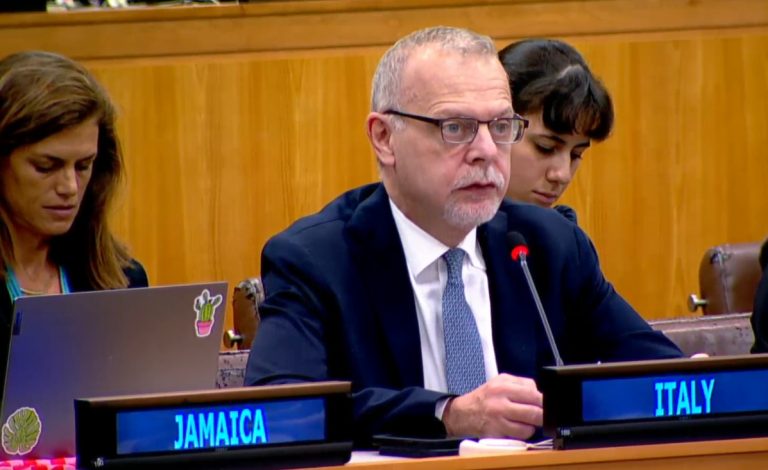
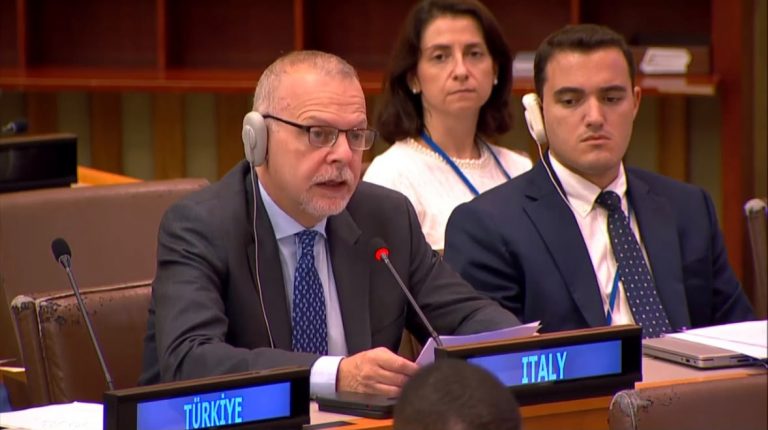
Thank you, Madame Chair,
Italy aligns itself with the statement delivered by the Cyprus Presidency of the European Union and wishes to add the following remarks in its national capacity.
We welcome the priorities of the 64th Session of the Commission for Social Development and recognise that care and support systems are essential to enabling societies to uphold dignity and equality.
The world is facing multiple and interconnected challenges in a time of profound multilateral crisis. Cooperation is therefore essential to advance social development. In this context, Italy supports international efforts in favour of expanding human capabilities and strengthening resilience to shocks.
The Pact for the Future represents a key reference framework for our collective action. Cooperation within the United Nations system remains essential to achieving the Sustainable Development Goals and to reinforcing social protection measures worldwide.
Italy firmly believes that equal access to education, decent work, and social protection systems is fundamental. Our Country promotes an inclusive and economy model rooted in solidarity and social cohesion and pursues a people-centred approach to care and support policies.
Madame Chair,
Leaving no one behind requires recognizing that poverty and social exclusion often stem from overlapping and multiple disadvantages, which demand comprehensive and coordinated responses. In Italy, the Ministry of Labor and Social Policies plays a central coordinating role in addressing these challenges, guiding national strategies for social inclusion through measures that combine income support with inclusion pathways aimed at fostering autonomy and empowerment.
Within this framework, Italy’s 2021–2027 National Program for Inclusion and the Fight against Poverty promotes an integrated approach to tackle the root causes of social exclusion, supported by substantial EU co-financing to strengthen assistance for the most vulnerable groups. Complementing these efforts, the National Poverty Fund ensures the delivery of essential social services to people experiencing poverty, including the risk of child poverty, reinforcing the overall capacity of local systems to respond effectively to complex needs.
Guided by the pillars of People, Planet and Prosperity, Italy recognizes that different forms of discrimination require integrated and inclusive policy responses. A multidimensional approach is therefore essential to guarantee social protection, sustainability, and employment-oriented strategies, with particular attention to intergenerational inclusion.
Italy is fully aware of its demographic profile, characterized by high life expectancy and a rapidly ageing population. The necessity to meet the needs of an increasing number of older citizens calls for coordinated policies, based on strong public-private cooperation, as well as balanced short- and long- term planning. In this regard, we place strong emphasis on inclusive education and lifelong training, with particular attention to upskilling and reskilling initiatives, including those supporting the employability of older workers. In a rapidly evolving global context, preventing skills obsolescence and ensuring timely adaptation to the green and digital transitions are essential priorities for our ageing population.
Such a forward-looking approach is fundamental to strengthening social resilience. Italy is therefore pursuing policies aimed at reinforcing labour-market participation, particularly among women, young and vulnerable groups, supported by complementary economic empowerment measures.
In particularly, Italy also invests in infrastructures that promote women’s independence and empowerment. A comprehensive set of measures has been implemented to support parenthood, including child allowances, parental leave schemes, measures for working mothers re-entering the labour market and family-focused incentives.
This approach fully reflects the 2030 Agenda and the 2021-2027 EU Action Plan on Integration, which underscore the importance of policy coherence in support of the full and meaningful participation of women, youth and migrant workers in society, through equitable access to education, labour markets and institutional decision-making processes.
In this spirit, Italy firmly continues to work with international partners to address shared challenges and to promote a resilient and inclusive society for generations to come.
I thank you, Madame Chair.