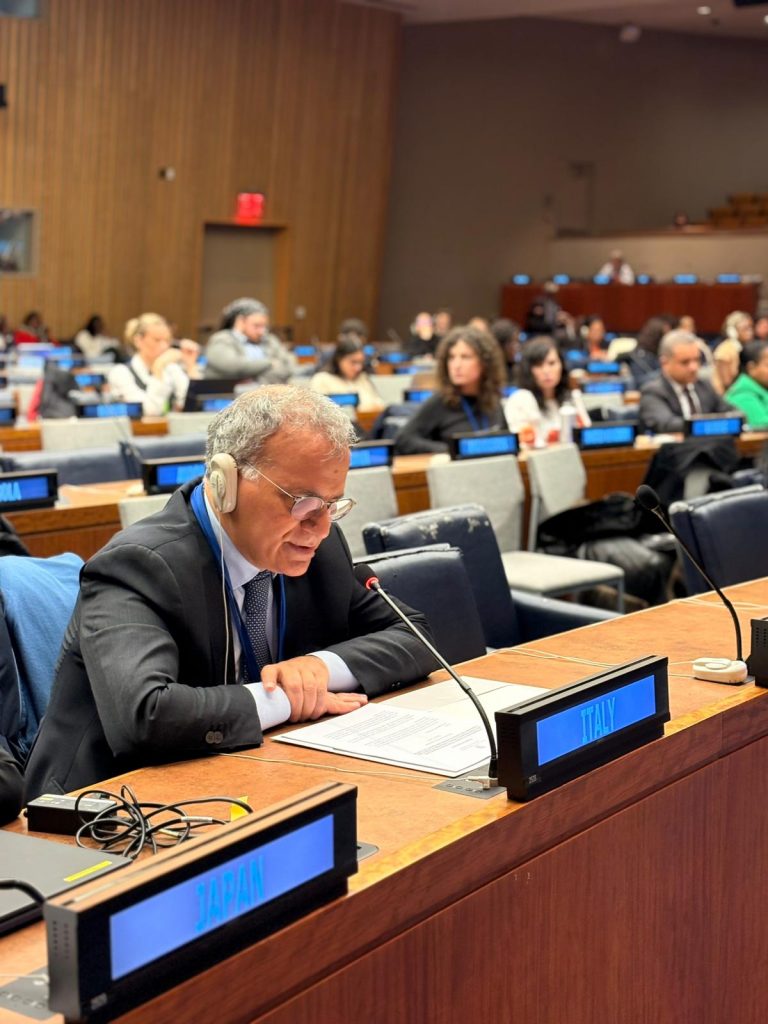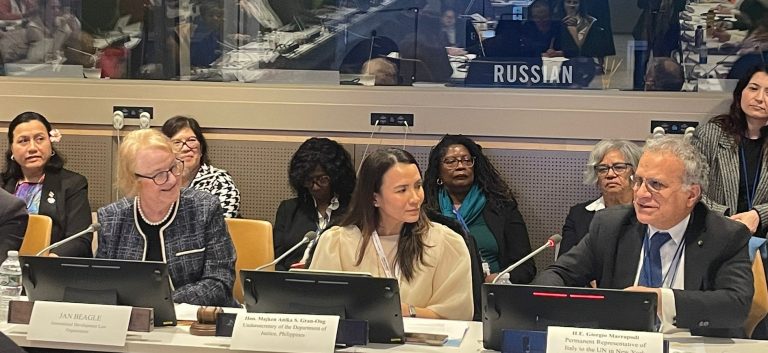
New York 2o febbraio 2026
Distinguished Co-Chairs,
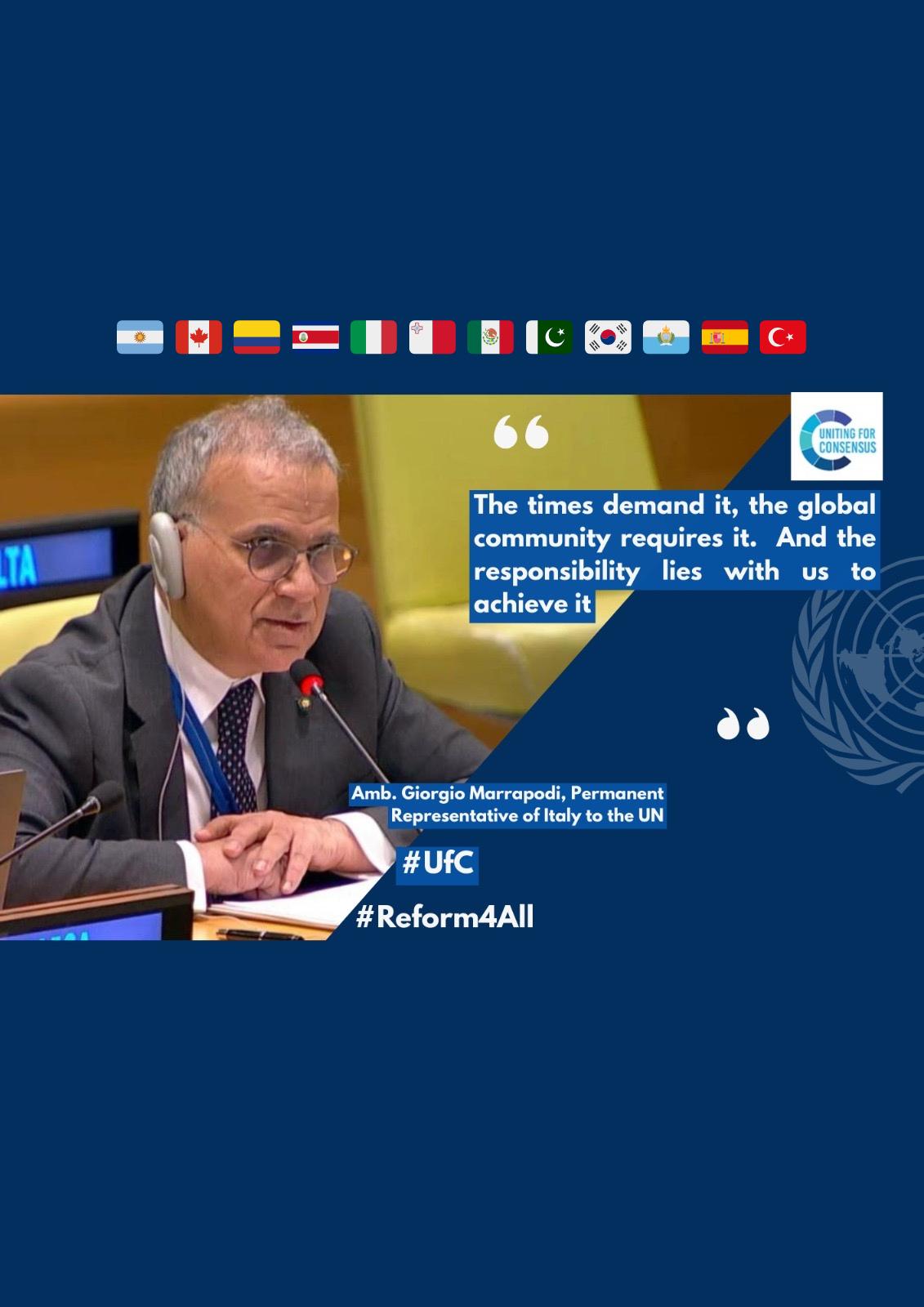
I make this intervention on behalf of Uniting for Consensus (UfC), a pro-reform, cross-regional and diversified group[1].
I wish to thank you for convening the second meeting of the Intergovernmental Negotiations on Security Council reform for this 80th Session of the General Assembly.
We are living in a moment of reckoning where the foundations of the rule of law are being questioned: challenges of diverse nature are emerging on a daily basis. The United Nations, as the universal multilateral organization, are not immune to these pressures.
To improve the efficacy of the Security Council we need to work together for a reform outcome that takes into account the fundamental principle of sovereign equality and enjoys the widest possible consensus, in line with Decision 62/557. We appreciate the constructive efforts of the co-chairs towards that end.
At the same time, we are firmly convinced that the IGN process can accommodate the diversity of views inherent in the reform.
The more inclusive the process, the strongest the outcome will be, with a higher likelihood of achieving a result that is both acceptable and sustainable.
UfC’s position on the categories of new members aims at enhancing the Council’s effectiveness, representation, democratization and accountability to the general membership.
Only through periodic elections could those principles be implemented; without them the democratic nature of the Council cannot be ensured.
IGN discussions have revealed that the expansion of non-permanent elected members is the only proposal to garner broad consensus.
An enlarged non-permanent membership would also generate more opportunities for the 59 countries that have never served in the Council.
The UfC compromise proposal of longer term, non-permanent seats, with the possibility of immediate re-election with terms ranging from 3 to 5 years, without creating a third category, would ensure continuous involvement in the Council’s work. Furthermore, seeking re-election would strengthen accountability and incentivize Council members to act in the collective interest.
On the contrary, new permanent seats would reduce the efficacy of the Council not making it more representative, since any additional permanent members would represent themselves, and would not be accountable to any wider constituencies.
Introducing new permanent seats would perpetuate lack of representation and have neither democratic legitimacy nor accountability. Expanding them would deepen the divide between a small group of countries and the vast majority of Member States.
While some have proposed expanding the Council by adding more permanent members to supposedly better reflect the realities of the 21st century, the global landscape has already shifted over the last 20 years, and would continue to evolve: it is our duty to reflect on how any reform would remain responsive to future shifts over the coming decades.
It is also important to note that proposals by different Member States and negotiating groups to expand the permanent category vary significantly in nature, with some envisioning a regional dimension and others individual national seats.
The existence of such divergent approaches highlights the absence of convergence on this issue. Against this backdrop, the UfC reminds its position as expressed in the model presented in March 2024 that ideally permanent membership should be abolished and further reiterates its principled opposition to the creation of any new permanent seats, regardless of their nature, designation, or modality, as it is against the principle of sovereign equality.
We are confident that if all Member States and negotiating groups engage with a constructive approach, IGN can advance meaningful convergences and achieve a common ground on the UNSC reform process.
The times demand it, the global community requires it. And the responsibility lies with us to achieve it.
I thank you.
[1] Argentina, Canada, Colombia, Costa Rica, Italy, Malta, Mexico, Pakistan, Republic of Korea, San Marino, Spain and Türkiye.