Dear Excellencies and colleagues,
Italy aligns itself with the statement delivered by the European Union and would like to make a few remarks in national capacity.
Increasing instability in the Middle East and the wider Mediterranean, including disruptions to maritime security and strategic routes linked to the Strait of Hormuz, is placing significant pressure on the world economy on many different levels.
Moreover, this crisis exacerbates the pre-existing negative effects of Russia’s aggression against Ukraine, which has been taking a heavy toll on global trade in energy, food supplies, and fertilizers since 2022.
Energy is one of the sectors where such pressure is felt the most, but the effects on food security are equally concerning, as discussed at the Eightieth Session of the FAO Council of 28 April 2026.
One of the major factors is the breakdown of global fertilizer and food supply chains, with particularly serious consequences for import-dependent countries across Africa and the Mediterranean.
Even more, its repercussions are felt far beyond the region and reach a global scale, especially in the most vulnerable countries such as Small Island Developing States, Least Developed Countries and Landlocked Least Developed Countries.
The only answer is to promote partnerships and strengthen coordination at international level to reinforce food security, economic resilience, and regional stability.
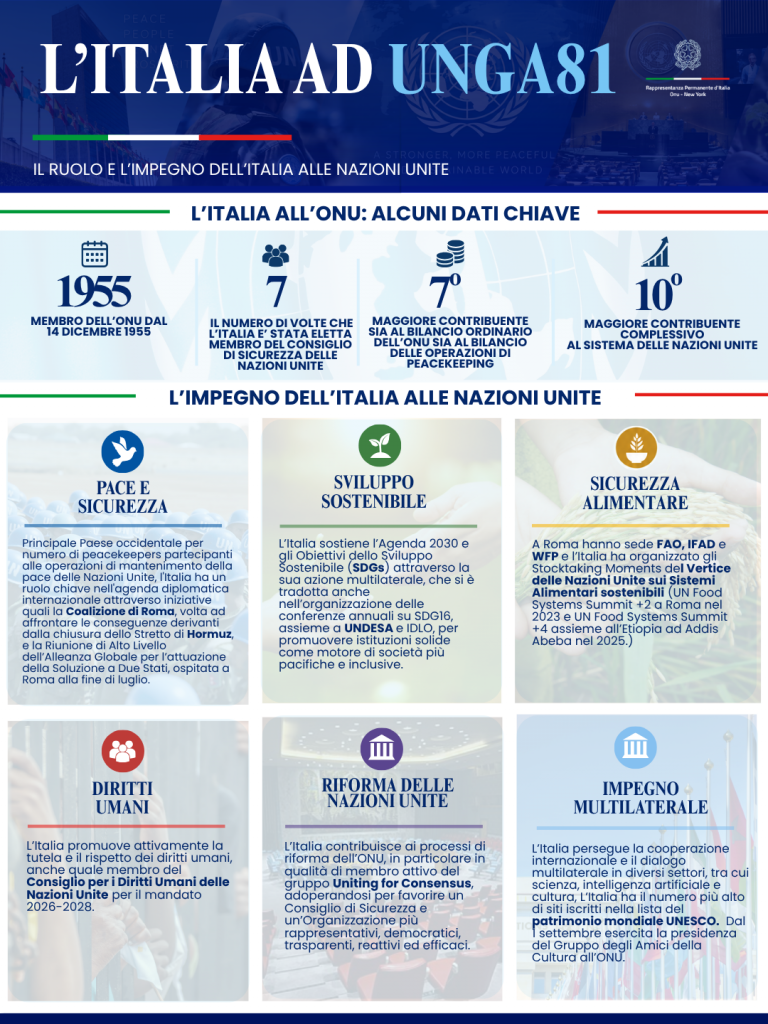
This is why on the 7th of May, Italy and Croatia convened a joint meeting of the EuroMed9, the Western Balkans countries and the Arab League, to reaffirm a collective commitment to ensure more stable, affordable, and diversified fertilizer and food supply chains.
Such commitment shaped the “Rome Coalition”, whose aims are:
- strengthening cooperation among producing, transit, and importing countries;
- expanding regional production capacities;
- improving logistics connectivity;
- and supporting investment in resilient agri-food systems.
The Rome coalition will keep engaging constructively with international organizations, FAO, the United Nations, and international financial institutions, to address price volatility and strengthen long-term agricultural resilience, particularly in Africa and the Middle East.
This is just part of our wider, shared commitment to maintaining the Mediterranean region as a space of peace, dialogue, and cooperation, and avoid further exacerbating instability, crises, humanitarian pressures, and migratory flows, and their repercussions on the region’s sustainable development.
We stand ready to work together toward coordinated and forward-looking response to shared global challenges.
I thank you all.