Distinguished Co-Chairs,
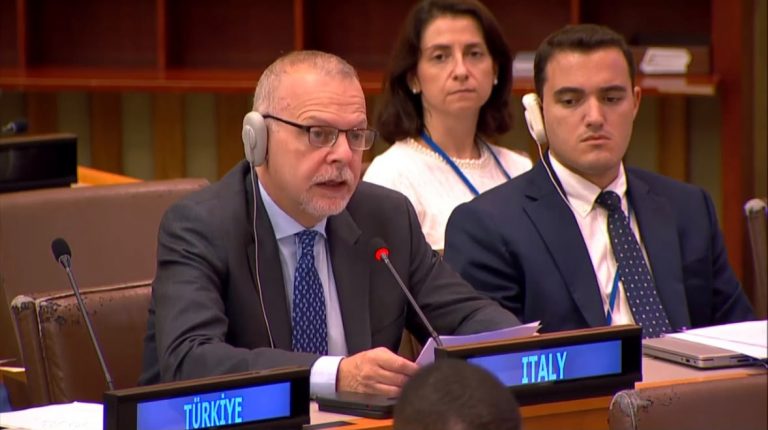
I have the honor to speak on behalf of the Uniting for Consensus (UfC) Group1.
The discussions conducted under the guidance of the Co-Chairs have enabled us to identify practical avenues for convergences across the five clusters2 of the reform and move beyond long-standing positions. We reiterate that all clusters are interrelated and need to be tackled in a comprehensive manner as a single undertaking, prior to considering the next procedural steps.
The decision establishing the IGN (62/557) requires a reform that can garner the widest possible political acceptance, to make the Security Council able to deliver on its primary mandate of maintaining international peace and security and to respond to evolving global challenges.
On the first cluster, “categories of membership”, the discussion has made clear that the only convergence among Member States is the expansion of elected members in the non-permanent category. By contrast, no convergences exist regarding the expansion of the permanent category of membership for different reasons: First, a significant number of Member States have not yet stated their views in the IGN. In this regard, it is important to distinguish between the views expressed by the negotiating groups active in the IGN and those of the wider UN membership, especially considering that some groups have overlapping compositions.
Second, it is important to distinguish among different definitions of permanent seats advocated by certain Member States and negotiating groups. In particular, some proposals envision permanent seats of a regional nature – such as those proposed by the African model. In contrast, other proposals advocate for individual permanent seats that would represent a Member State national agenda only.
Third, others support the creation of new permanent seats but without veto.
At a time of constant geopolitical changes, periodic elections are pivotal to ensuring accountability and representation. The requirement to seek reelection by the UN membership strengthen accountability and representativeness.
Distinguished Co-Chairs,
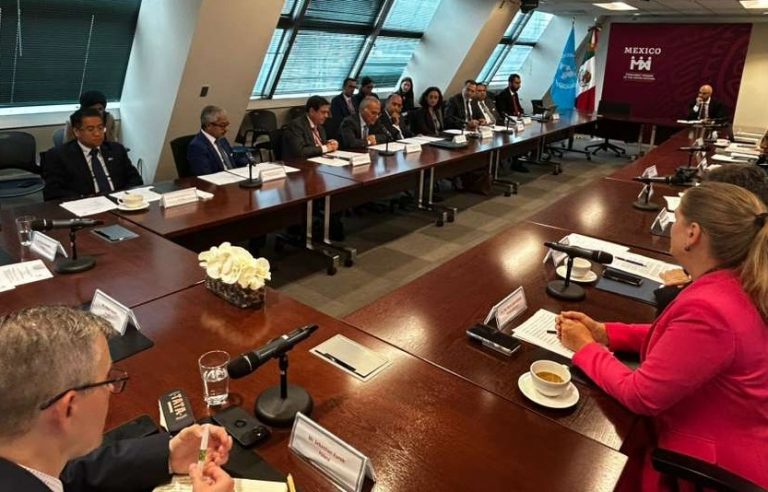
On the “question of the veto”, while firmly advocating for its suppression, we should advance tangible measures in the immediate term to limit its use in specific circumstances, such as in cases of mass atrocities, crimes of genocide, crimes against humanity and war crimes, in line with existing initiatives, including the Franco-Mexican Political Declaration and the ACT code of conduct. UfC is willing to take an active part in all discussions to this end.
Expanding this prerogative to any additional member risks deepening existing structural imbalances and increasing paralysis within the Council. Regarding the third cluster, “regional representation” in the Council remains a priority. It is our view that each regional group should have fair, predictable, and increased opportunities for its Member States to serve on the Council. The UfC fully supports the calls from underrepresented regions such as Africa, Asia-Pacific and Latin America, and the Caribbean. The UfC remains open to the idea of exploring special arrangements for cross-regional groups to improve representation, while preserving the Council’s efficiency. We note that the UfC proposal to enhance the representation of Small Islands and Developing States (SIDS) has attracted wide support. We note also that Arab States and others, such as the OIC have been mentioned in IGN discussions.
Distinguished Co-Chairs,
A more functional Council is essential to strengthening multilateral cooperation. In this regard, the fourth cluster on “the size of an enlarged Security Council and its working methods” plays a fundamental role.
We are all convinced that a more efficient and transparent Security Council is needed to regain trust in the United Nations. The Council is a collective body, comprising Member States, all of whom are expected to work together on an equal footing. This has been reflected in the request to have a fair burdensharing and equal distribution of “pen-holdership”, and chairing of subsidiary bodies among permanent and elected members.
Finally, regarding the fifth cluster on the “Relationship between the Security Council and the General Assembly”, we believe that the two main political organs of the United Nations should be complementary and mutually reinforcing. In this context, it is essential to have a Council that is representative of the wider membership, and a basic prerequisite for this is periodic election of non-permanent Council members by the General Assembly.
We encourage all delegations—particularly those that have not yet done so— to engage actively in the discussions and consider presenting concrete ideas and proposals that may contribute to identifying areas of convergence and possible compromises capable of bridging existing positions. In this spirit, UfC will continue to participate in the IGN constructively and with flexibility, with the aim of advancing a comprehensive reform that serves the interests of the entire membership.
I thank you.