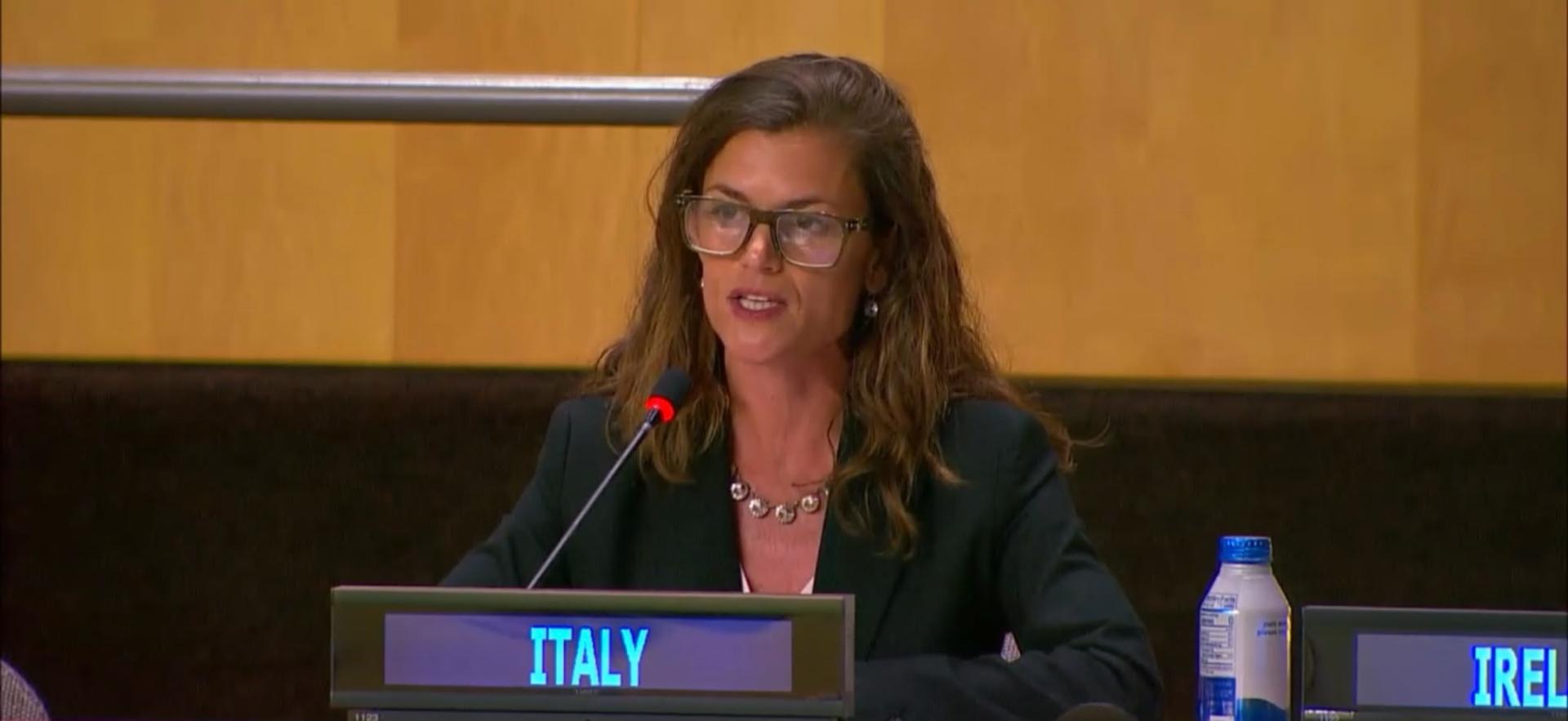
Mr Chair,
Excellencies,
Ladies and Gentlemen,
Let me begin by expressing our sincere gratitude to Spain for its leadership in chairing this year’s ECOSOC Humanitarian Affairs Segment.
Italy aligns itself with the statement to be delivered by the European Union.
We meet amid unprecedented humanitarian needs, as conflicts grow more protracted and complex, with civilians continuing to bear the brunt of war. At the same time, humanitarian actors face severe funding constraints, mounting operational challenges, and growing risks to their safety.
Against this backdrop, this year’s theme is particularly timely, especially as we witness an alarming erosion of respect for the rules designed to protect civilians and limit the consequences of armed conflict.
Attacks against civilians, humanitarian and medical personnel, and civilian infrastructure continue in far too many contexts, reflecting a deeply concerning reality. International Humanitarian Law (IHL) is not optional: it is binding on all parties to armed conflict and must be respected at all times.
Italy remains firmly committed to promoting compliance with IHL and to supporting initiatives aimed at strengthening its effective implementation. In recent years, we have intensified our efforts in this field through training, awareness-raising activities and international partnerships, including with the Italian Red Cross and other humanitarian actors. We also continue to support international initiatives aimed at protecting humanitarian personnel and strengthening accountability for violations of International Humanitarian Law, notably the Global Initiative to Galvanize Political Commitment to International Humanitarian Law.
Local actors are often the first responders and remain present long after international attention has shifted. Strengthening their capacities and ensuring more direct and predictable access to funding are essential for a more effective and sustainable response.
At the same time, we must address the growing gap between needs and resources. Humanitarian financing must become more flexible, predictable, and impact-driven, with improved coordination among donors, international organizations, and local partners. We will continue to strengthen the nexus between humanitarian action, development cooperation, and peacebuilding, including support for durable solutions for displaced populations and crisis-affected communities.
We remain determined to work with the United Nations and all partners to uphold humanitarian principles, protect vulnerable populations, and ensure that assistance reaches those most in need.
Allow me to conclude by paying tribute to humanitarian workers around the world. Every day, often at great personal risk, they bring lifesaving assistance, protection and hope to millions of people. They deserve our gratitude and, above all, our unwavering political support and our collective commitment to uphold the rules and principles that make humanitarian action possible.
I thank you.